Fulvic minerals are one of those wellness ingredients that sound almost self-explanatory.
Minerals from the earth, concentrated into a powder or liquid, added to water, and suddenly we are talking about mineral replenishment, cellular absorption, detoxification, gut health, energy, and sometimes practically everything in between.
That is usually my cue to slow down and look a little closer. I am genuinely interested in fulvic products, and I have one among the products I recommend. But being interested in something does not mean we need to repeat every claim attached to it.
Fulvic substances are fascinating enough without turning them into a miracle mineral supplement. The first thing worth understanding is that fulvic acid itself is not actually a mineral.
So What Is Fulvic Acid?
Fulvic acid belongs to a larger group of naturally occurring materials called humic substances.
Humic substances develop as plant and other organic material breaks down and is transformed within soil, sediment, peat, and similar environments over long periods of time.
Traditionally, humic substances are separated into categories that include humic acid and fulvic acid. Fulvic fractions tend to consist of smaller, more water-soluble molecules than humic acid, which is one reason they behave differently chemically. They contain numerous functional groups capable of interacting with metals, minerals, and other molecules around
them. PubMed Central (PMC)
That is where the phrase “fulvic minerals” begins to make more sense.
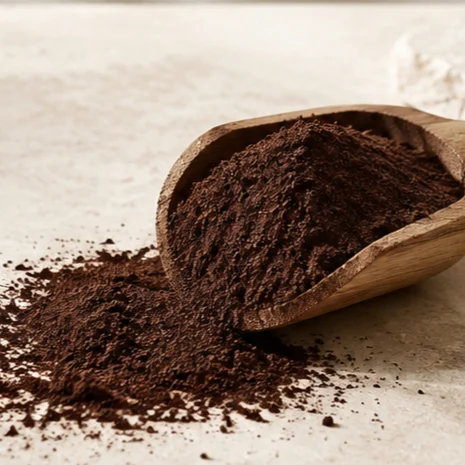
Fulvic substances naturally occur in environments that also contain minerals, and their chemistry allows them to bind or complex with various mineral ions. Commercial products may therefore contain fulvic substances along with naturally occurring trace minerals.
But fulvic acid itself is not magnesium, zinc, iron, calcium, or another essential mineral.
That distinction matters.
Why Is Fulvic Acid Associated With Minerals?
Part of the interest in fulvic substances comes from their chemical structure. Fulvic molecules contain groups that can interact with metal ions, which is why humic substances are important not only in supplement research but also in soil science, agriculture, environmental chemistry, and water systems.
In soil, these interactions can affect the movement and availability of minerals and other compounds. Researchers are also investigating how fulvic substances behave biologically, including their interactions with cells and microorganisms. PubMed Central (PMC)
This is where wellness marketing often takes a very big leap.
You may see statements that fulvic acid “carries nutrients directly into your cells” or dramatically increases cellular absorption. Fulvic chemistry provides a plausible reason to study transport and mineral interactions, but strong clinical evidence showing that taking an over-the-counter fulvic supplement broadly improves nutrient absorption in humans is still lacking.
There is an important difference between understanding what a molecule can do chemically and proving a particular health outcome in people.
What Does the Human Research Actually Look Like?
This is probably the biggest surprise if you have spent much time reading fulvic-product websites.
There simply are not many high-quality human clinical trials.
A small Phase I study investigated a specific carbohydrate-derived fulvic acid preparation in healthy adults. Twenty-one participants completed the trial, and investigators did not find significant safety problems during the study at the doses tested. The researchers also explored an allergy-related skin response, but this was a small early-stage study of one specific preparation—not evidence that all fulvic supplements provide the same effects. PubMed Central (PMC)
Much of the more exciting research surrounding fulvic acid remains laboratory, animal, or other preclinical work. Researchers have investigated antioxidant activity, inflammatory signaling, microbial interactions, wound-related processes, and possible effects on the gut microbiome.
A 2025 review described a broad range of potential biomedical applications while emphasizing that differences in composition and the lack of standardized preparations remain major limitations. PubMed Central (PMC)
Newer 2026 research has also found interesting anti-inflammatory and microbiome-related effects in cellular and experimental models, but the authors themselves emphasized the need for stronger mechanistic research and clinical trials before those findings can be translated into human health recommendations. PubMed Central (PMC)
So there is interesting science here.
There just is not enough human evidence to turn every interesting finding into a health promise.
What About “Detox”?
Fulvic products are frequently marketed for detoxification because fulvic substances can interact with metals.
Chemically, that ability is real. Humic substances can bind metals, which is one reason they have been studied in environmental science and even as possible materials for removing contaminants. PubMed Central (PMC)
But saying a substance can bind a metal under certain conditions is not the same as proving that drinking fulvic minerals safely removes heavy metals or “toxins” from the human body.
I would be especially cautious about that claim.
Our bodies already have sophisticated systems responsible for processing and eliminating substances, particularly involving the liver, kidneys, gastrointestinal tract, lungs, and other tissues. If someone has suspected heavy-metal exposure or toxicity, that deserves proper testing and medical evaluation rather than relying on a supplement marketed as a detox.
This is one of those areas where the mechanism sounds compelling enough that marketing can get several steps ahead of the actual clinical research.
Source Matters More Than You Might Think
This is probably the most important thing I would want someone to understand before buying a fulvic product.
Fulvic material comes from the earth. And the earth contains more than the things we want. Its composition can vary depending on where the source material originated, how it was extracted, how it was processed, and what contaminants were present in the original material.
Researchers evaluating fulvic and humic preparations have specifically noted that differences
in source location and extraction methods can affect composition and potentially safety. PubMed Central (PMC)
This is not just a theoretical concern.
In 2021, the FDA warned consumers not to use Black Oxygen Organics Fulvic Care Powder or tablets after testing found elevated levels of lead and arsenic. The agency advised consumers to discard the products. U.S. Food and Drug Administration
That example does not mean fulvic products inherently contain dangerous levels of heavy metals.
It means testing matters tremendously for something that originates from geological and organic deposits. For me, that makes third-party contaminant testing much more important than a beautiful label or a long list of wellness claims.
Not Every Fulvic Product Is the Same
This is another reason it is difficult to make blanket statements about “fulvic acid.”
Different products can originate from different materials and locations. They may use different extraction processes, contain different concentrations of fulvic substances, have different mineral profiles, and contain different amounts of humic material.
Even research preparations are not necessarily interchangeable. Toxicology studies that find one purified fulvic preparation to be well tolerated cannot automatically establish the safety of
every fulvic product being sold.
For example, one toxicology study found no significant adverse effects in animals given a particular purified fulvic preparation even at relatively high experimental doses. That is useful safety information about that preparation, but researchers also acknowledge the larger problem of variability between fulvic sources and products. PubMed Central (PMC)
This is why I would rather know how a company tests its product than simply see the words “ancient minerals” printed across the front.
Is Fulvic Acid the Same as Shilajit?
They are related, but they are not interchangeable.
Shilajit is a naturally occurring substance found primarily in mountainous regions and contains a complex mixture of organic material, minerals, humic substances, and fulvic compounds.
Fulvic acid is one component that may be isolated or concentrated from humic materials. So a fulvic mineral powder is not automatically shilajit, and a shilajit supplement should not automatically be treated as pure fulvic acid.
This matters when reading research because studies involving one preparation do not necessarily tell us what another preparation will do.
The label matters.
The source matters.
The preparation matters.
What I Look for in a Fulvic Mineral Product
This is one ingredient where I care less about how many benefits a company lists and much more about how transparent it is.
I want to know where the material comes from, what form I am actually getting, whether the company tests for contaminants such as lead, arsenic, cadmium, and mercury, and whether those results are available rather than simply claimed. I also want clear serving information and an ingredient list that tells me what else is in the product.
I become much more skeptical when the marketing centers on curing disease, removing heavy metals from the body, “rebuilding cells,” or correcting dozens of unrelated conditions.
In fact, the FDA issued a warning letter in 2026 involving a company selling fulvic mineral products because the products were being marketed with disease-treatment claims that caused them to be considered unapproved drugs under federal law. U.S. Food and Drug Administration
Fulvic substances are interesting without needing to make those promises.
What About Trace Minerals?
This is where I think people can accidentally combine two different ideas.
Our bodies absolutely require minerals. Magnesium, potassium, sodium, calcium, zinc, iron, selenium, copper, and many others play essential roles throughout human physiology.
But “contains trace minerals” does not automatically mean “provides meaningful amounts of every mineral you need.”
If someone's goal is correcting a documented mineral deficiency, the amount and form of that specific nutrient matter. A fulvic product containing tiny quantities of many elements is not necessarily equivalent to an appropriately dosed mineral supplement or to getting minerals through food.
That does not make the trace-mineral content useless. It simply means we should not ask one product to be something it is not.
Where Fulvic Minerals Fit for Me
I think fulvic minerals fit best in exactly the same place I put most supplements: after the foundations, not before them.
They can be an interesting addition for someone who has researched the product, understands what it contains, and feels that it fits into their wellness routine. I am particularly interested in the evolving research around fulvic substances and mineral interactions, and I will continue watching as stronger human evidence becomes available.
But I would not use fulvic minerals as a replacement for nourishing food, adequate hydration, sleep, movement, or appropriate medical care. And I definitely would not assume that because something came from the earth, quality no longer matters.
If anything, the opposite may be true.
The Fulvic Product I Recommend
I do have a fulvic option included on my Products I Recommend page for anyone who wants to see the type of product I look for.
I would keep that mention right here near the end rather than building the article around the product. By this point, someone reading has already learned what fulvic acid is, where the evidence stands, why testing matters, and what questions are worth asking.
Then they can decide whether they are interested in a product at all.
That is exactly how I want recommendations to work.
Observe
If you already have a fulvic mineral product in your cabinet, pull it out and look at the label.
Does it tell you the source? Does the company provide contaminant testing? Do you know what the serving actually contains? Are the benefits being described realistically, or does the bottle seem to promise everything from detoxification to energy to gut health to cellular repair?
You do not need to become a chemist to make a better decision. Sometimes you simply need to ask better questions.
Fulvic substances are fascinating. They have complex chemistry, a long relationship with the natural environment, and an emerging body of biomedical research worth following.
But interesting does not have to mean miraculous.
And understanding the difference is exactly the kind of wellness education I want The Iris Oracle to be about.
A Note About Fulvic Supplements
Fulvic products vary considerably in source, composition, concentration, and purity. Supplements may also contain naturally occurring or environmental contaminants, making reputable testing especially important. This article is for general education and is not intended to diagnose, treat, cure, or prevent disease. Anyone who is pregnant or breastfeeding, takes medication, has a medical condition, or has concerns about mineral or heavy-metal exposure should discuss supplementation with an appropriately qualified healthcare professional.
References
I’d keep five on this one because they each serve a different purpose:
Dai C, et al. A Comprehensive Toxicological Assessment of Fulvic Acid. 2020. Examines the toxicology of a specific purified fulvic-acid preparation and highlights the importance of preparation-specific safety data. PubMed Central (PMC)
Gandy JJ, et al. Phase 1 clinical study of the acute and subacute safety and proof-of-concept efficacy of carbohydrate-derived fulvic acid. Clinical Pharmacology: Advances and Applications. 2012. A small human trial evaluating a specific carbohydrate-derived fulvic preparation. PubMed Central (PMC)
Biomedical Applications of Humic Substances: From Natural Biopolymers to Therapeutic Agents. 2025. Reviews humic and fulvic chemistry, emerging biological research, and limitations caused by differences among preparations. PubMed Central (PMC)
A toxicological evaluation of a fulvic and humic acids preparation. 2020. Discusses safety data and why geographic source and extraction processes can influence fulvic/humic preparations. PubMed Central (PMC)
U.S. Food and Drug Administration. FDA Advises Consumers Not to Use Fulvic Care Powder and Tablets from Black Oxygen Organics Due to Elevated Levels of Lead and Arsenic. 2021. This is the strongest practical reason for emphasizing contaminant testing when choosing fulvic products